|
|||
| BEIJING | <Search <Archives <eBulletin | ||

July 27, 2016 ADB loan for Beijing Air Quality Improvement Program A program preparation report by Atkins assessing the potential environmental impacts of policy actions taken by the Hebei provincial government to tackle the long standing air pollution in the greater Beijing capital area has helped secure a loan of $300 million, the first ever policy based loan to the People’s Republic of China (PRC) from the Asian Development Bank (ADB).
The greater Beijing capital area - comprising Beijing, Tianjin, and Hebei (BTH) - is home to about 109 million people and accounts for 10 percent of the national gross domestic product. The region’s unprecedented growth has resulted in serious air pollution from industrial and urban development, and from a sharp rise in the use of motor vehicles. Concentrations of inhalable particulate matter of less than 2.5 micrometres (PM2.5) in the area have reached several times higher than cities in developed countries. This has become a significant cause for concern - not only for local residents but also neighbouring countries and the rest of the world. The World Health Organization concludes that no amount of PM2.5 is safe. In addition to helping to reduce air pollution this project aims to contribute to the PRC’s commitment to reduce greenhouse gas (GHG) emissions by cutting the region’s coal consumption, as discussed at COP 21 UN Framework Convention on Climate Change in Paris last November. Ultimately the project will contribute greatly to a better and healthier living environment for people of Beijing. In 2014, seven of the 10 cities with the worst air quality in the PRC were in Hebei. With ADB support, Hebei is making fundamental reforms in its energy and socioeconomic policies and establishing a solid basis for incremental reforms and investments in improving air quality and public health. These include policy actions to switch from coal to cleaner energy, promote public transport in urban areas, and increase use of biomass for energy in rural areas. It will also develop a monitoring and analysis system and help strengthen environmental regulatory enforcement. 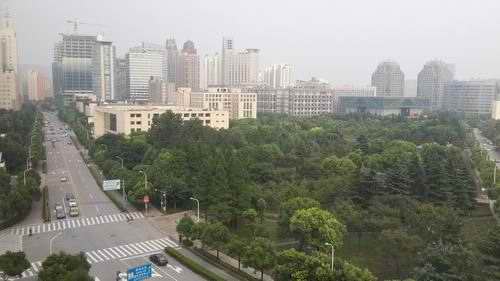 Air quality improvement in China's major cities is a priority
Building & Construction E-Book series |
|





|