|
|||
| Products & Services | <Search <Archives <eBulletin Next> | ||

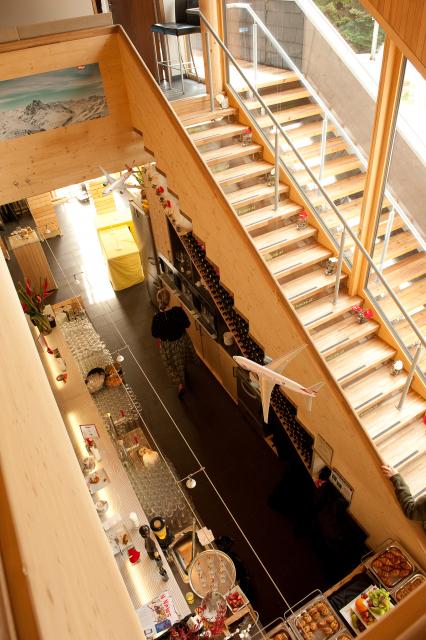
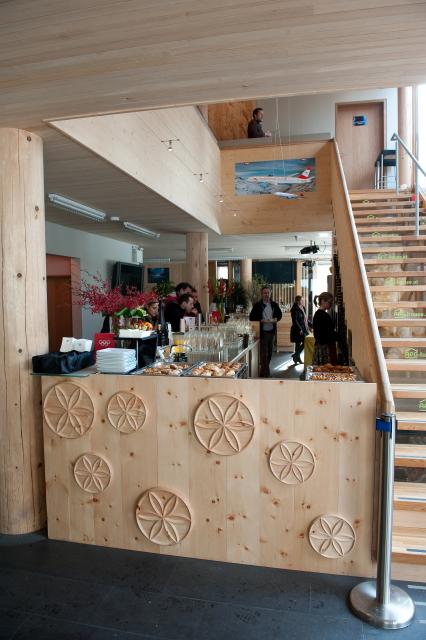
March 21, 2010 The Passive House In time for the Winter Games the first Canadian Passive House has been awarded the Passive House Institute Certificate. The Passive House in Whistler proves that Olympic records based on sustainable energy are also possible. The 250 sq m large building was jointly developed by the Austrian Passive House Group (APG) and the Municipality of Whistler. It will be at the disposal of the Austrian Committee during the Olympic and Paralympic Winter Games 2010, and after the Games it will be used as a cross-country skiing and mountain bike centre.
"The Passive House is an energy standard which is available worldwide – the same laws of physics apply everywhere", said Professor Dr. Wolfgang Feist of the Building Physics Unit of the University of Innsbruck, who is also the Director of the Passive House Institute in Darmstadt. "Through the use of established planning methods, the standard provides comfortable solutions which are optimally adapted to the respective climates and which are sustainable because the energy consumption is extremely small. They can adjust to regional traditions and use so much less energy that there is no need for conventional heating or cooling systems. In fact, optimally adapted small and compact systems are used – and the the energy consumption is thus reduced to a tenth of the normal consumption of existing buildings. And this is achieved above all by the engineers and craftsmen applying their knowledge and skills. 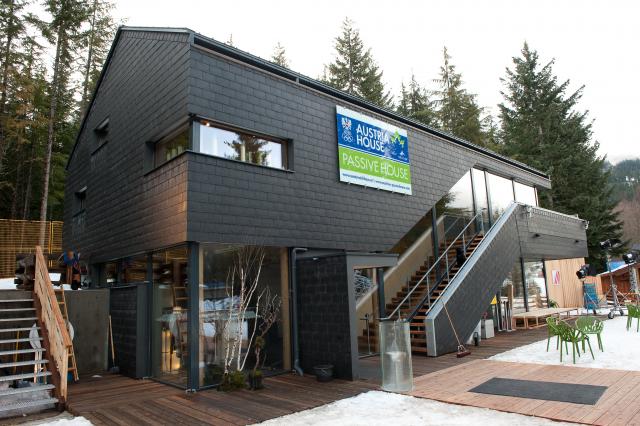 In Japan More than eleven thousand kilometres away from Whistler, the architect Miwa Mori and her clients, the Hasumi Family, are very pleased with the first Passive House in Japan. Like the house in Whistler, the building was awarded the Passive House Institute Certificate. The attestation guarantees that the high demands for conception, planning and implementation were met.
The Hasumi family feels very comfortable in the warm Passive House with an area of 80 sq m. Moving into the Passive House has had a positive effect on the health of the family members: the parents are particularly pleased that the asthmatic attacks which the two children used to have in their former home do not occur in the Passive House. Architect Mori relates her experiences with the planning of the first Passive House in Japan: "The budget for the project was limited, so that we had to search for a particularly cost-effective solution. In Japan there are hardly any obligatory standards for housing construction so far. What is mainly checked for is, whether buildings offer any protection from earthquakes and fire. Accordingly, triple-glazing, highly efficient thermal insulation and other technologies that are applied in Passive Houses are foreign concepts for most Japanese people". Passive Houses aren't necessarily more expensive than ordinary constructions, and they save so much in energy costs year after year that any additional credit can be easily financed. In Germany Passive Houses are financially assisted by the KfW. |
|

Copyright © Building.hk All rights reserved.
|